Mahua Tiger Resort

Kanha

A vast, luminous wilderness of sal forest and open meadow — where tiger tracks cross the road at dawn and the hard-ground barasingha still walks because conservation brought it back from the edge.

Enquire for Kanha
The national park

A forest that opens into light.

Kanha sits in the Maikal range of Madhya Pradesh, spreading across Mandla and Balaghat districts. Its character shifts constantly: tall sal forest gives way to bamboo, broad grasslands, forest streams and long, misty meadows.

It became a national park in 1955 and was among the earliest landscapes brought under Project Tiger. Today the wider Kanha Tiger Reserve covers more than 2,050 sq km of core and buffer habitat.

What makes Kanha unforgettable is not only the possibility of a tiger. It is the scale of the landscape — the feeling of moving slowly through a living mosaic where gaur step from the trees, deer gather in the grass and alarm calls travel farther than the eye can see.

Kanha at a glance

  • National parkEstablished 1955
  • Tiger reserveProject Tiger landscape
  • Signature habitatSal forest & meadows
  • Conservation iconHard-ground barasingha
2,051.79 km²Total Kanha Tiger Reserve area listed by NTCA
917.43 km²Core tiger reserve area
1,134.36 km²Buffer tiger reserve area
1955Year Kanha was established as a national park
A sense of Kanha

Morning mist lies low over the meadow.

The jeep moves quietly under sal leaves still holding the night. Somewhere beyond the grass, a langur calls. Chital stop feeding and turn their heads. A barasingha lifts its antlers into the first gold light. The tiger may appear — or it may remain only a set of fresh pugmarks leading into bamboo. Either way, the forest has already begun its story.

Why Kanha matters

One of India’s great conservation stories.

Barasingha

The jewel of Kanha

Kanha is celebrated for the recovery of the hard-ground barasingha, a rare swamp deer adapted to firm grassland rather than marsh. Its population had fallen dangerously low before decades of habitat management and conservation helped it recover.
Landscape

Forest, grass and water

The Banjar and Halon river systems, sal forests, bamboo and open meadows create a landscape that supports both predators and large herds of herbivores. That variety is a major part of Kanha’s visual drama.

Wildlife

Far more than tiger

Tiger sightings are never guaranteed, but Kanha can also reward patient visitors with gaur, chital, sambar, dhole, sloth bear, langur and a rich variety of birdlife.

TigerBarasinghaGaurDholeChitalSambarSloth bear
Slow travel

The silence between sightings

Kanha rewards attention: a fresh track in dust, the sudden stillness of deer, giant trees catching evening light, and the chorus of birds as the forest changes from morning to afternoon.

Wildlife sightings depend on season, zone, weather, animal movement and chance. The uncertainty is part of an ethical wildlife experience.

Your base near the forest

Mahua Tiger Resort Kanha.

The forest is the reason to travel. The resort is where the day softens: shower, rest, swim, eat, talk about the safari and get ready to do it all again at dawn.

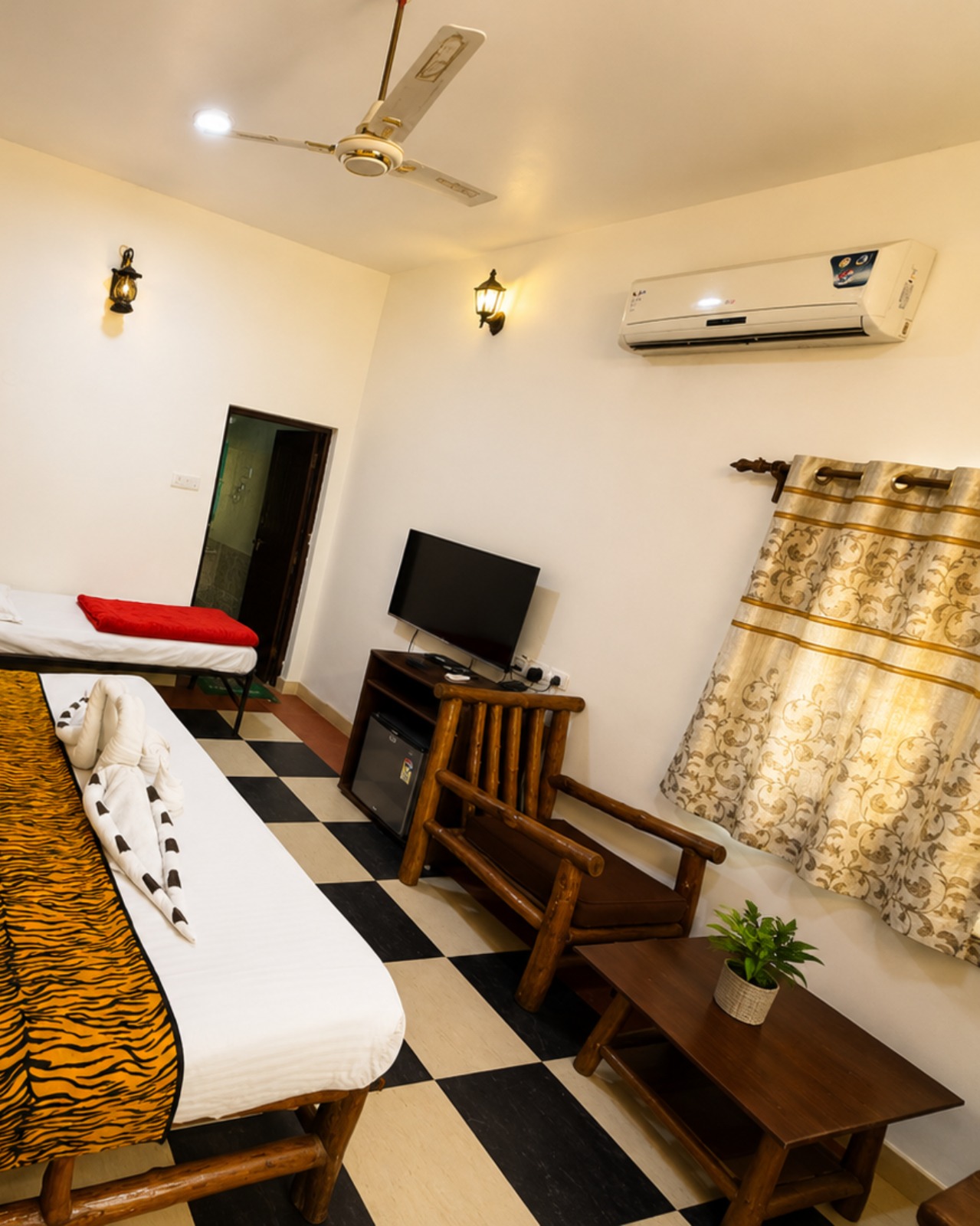
Guest room at Mahua Tiger Resort Kanha
Guest roomsAir conditioning, television and practical comforts for safari travellers.
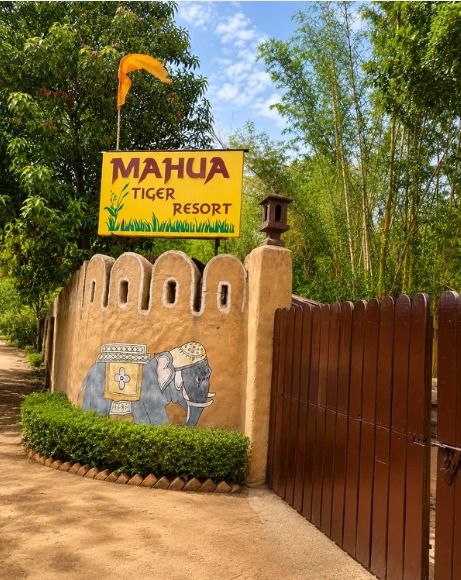
Entrance sign at Mahua Tiger Resort Kanha
Arrive at MahuaA forest-resort setting in the Kanha landscape.
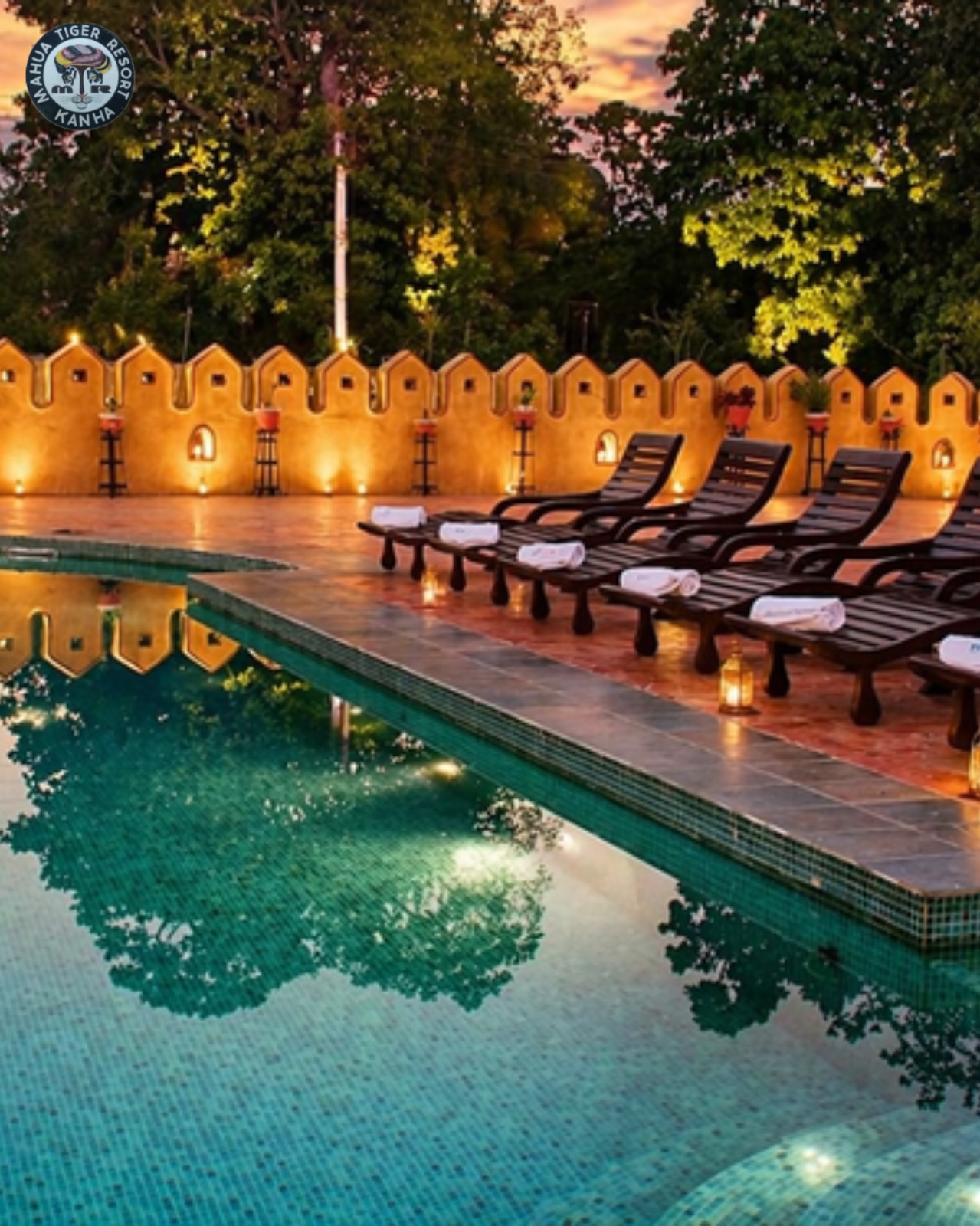
Mahua Tiger Resort Kanha swimming pool in the evening
Pool eveningsUnwind when the safari day is done.
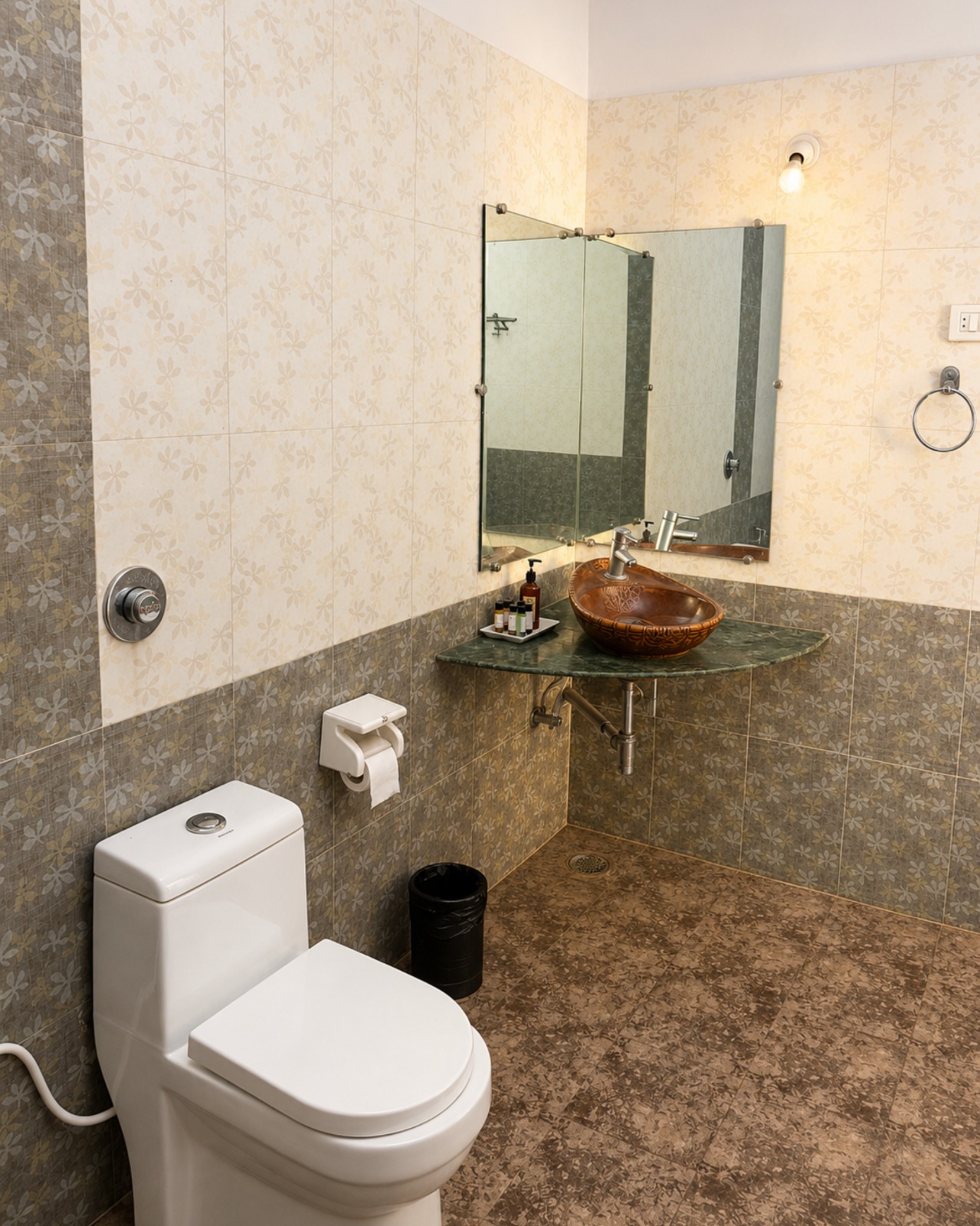
Bathroom at Mahua Tiger Resort Kanha
Private bathroomsClean, functional facilities for a comfortable stay.
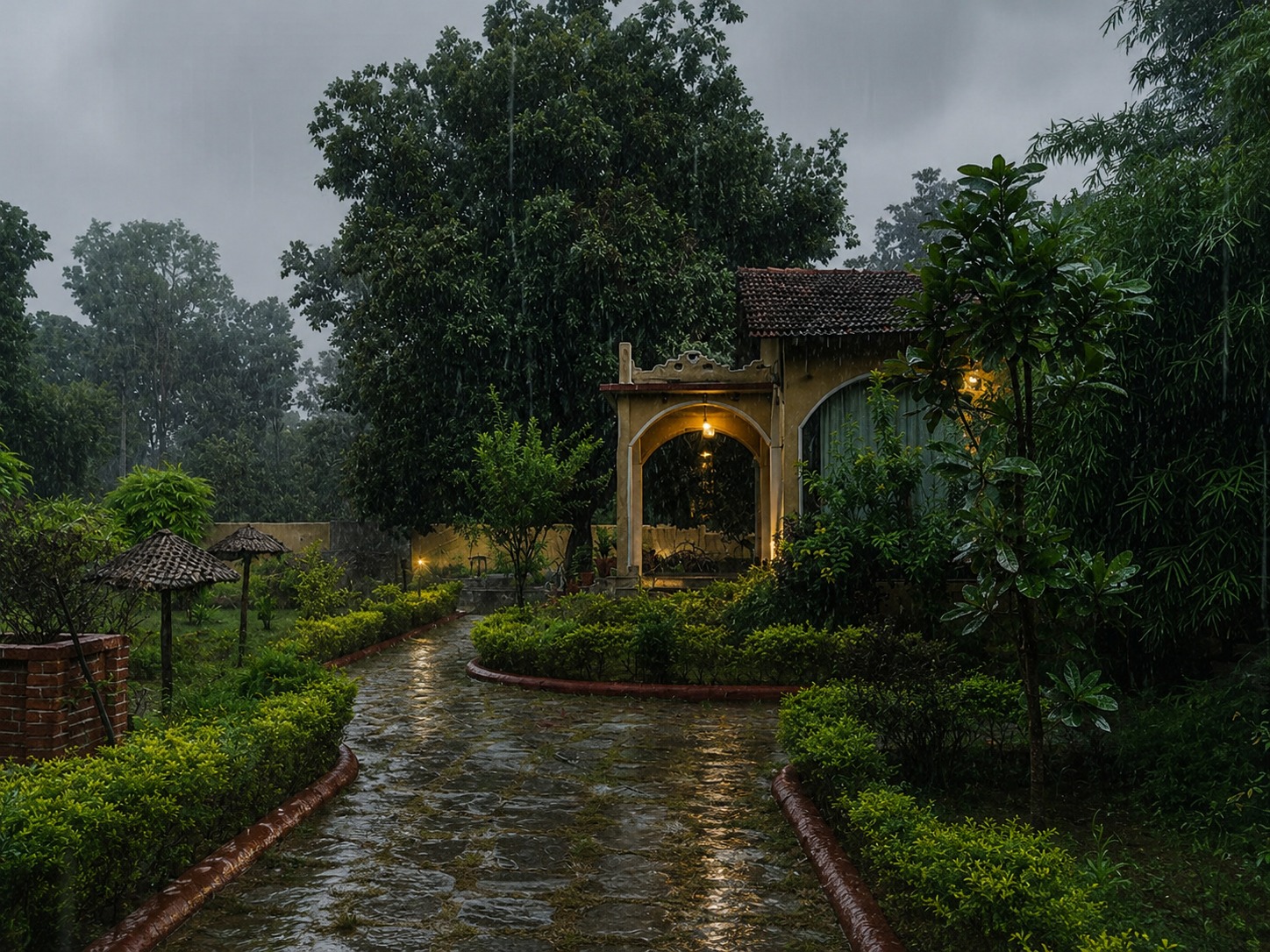
Green resort garden in the rain at Mahua Tiger Resort Kanha
Monsoon greenThe property takes on another mood when the rain arrives.
Wildlife & birdlife

Watch the forest come alive.

Kanha is famous for the Bengal tiger and the conservation of the hard-ground barasingha. The same forest also supports gaur, dhole, deer, sloth bear and a rich community of birds.

Wildlife photographs: free imagery from Unsplash, used illustratively and not represented as having been photographed inside Kanha.
What to look for

Make the safari bigger than the tiger.

Watch how the landscape changes, listen for alarm calls, notice the difference between sal forest and meadow, and ask your naturalist about tracks, trees and smaller wildlife.

MP Tourism highlights birding, nature exploration around the buffer, and the Banjar and Halon river landscapes as ways to experience Kanha beyond headline sightings.

“The most memorable moment may be the tiger crossing the track — or the minute before it, when the whole forest seems to know something you do not.”
Extend the journey

Nearby attractions from Kanha.

An extra day or two can pair Kanha with river landscapes, sacred highlands and slower cultural experiences.

Approx. 131 km

Jabalpur & Bhedaghat

See the Narmada pass through the Marble Rocks and visit Dhuandhar Falls, then continue into Jabalpur for city sights and onward connections.

Distance is approximate; driving time varies by road conditions.
Approx. 159 km

Amarkantak

High in the Maikal hills, Amarkantak combines the sacred source region of the Narmada with temples, wooded scenery and waterfalls.

A natural extension for travellers interested in nature and pilgrimage.
At Kanha

Kanha Museum & Mocha

Use the hours outside safari to learn about wildlife and ecology at the museum or slow down around Mocha and the Banjar River landscape.

An easy option between early and afternoon drives.

Wake up near Kanha.

Stay in Village Mocha and build your days around early drives, quiet afternoons and the forest at its own pace.

W Plan your stay